Operating standards for hospitality · India
Every shift, to standard.
SOPhero captures how your best people work, puts it at every station in your crew’s language, and proves it held — for F&B groups, hotels and new openings in Singapore and Malaysia.
Expert-validated steps · 30 crew languages, from Bahasa to Arabic · India regulations mapped
Where standards break
SOPs matter most where a mistake costs most.
We start with the steps that can hurt someone, fail an inspection or leak margin, then work outwards to the guest experience — and we build every one to survive turnover.
Safety and compliance
01
One allergen answer can close an outlet.
Temperatures, allergens, chemicals, fire and heat stress: the steps where a wrong move hurts someone or fails an inspection. They need exact procedures, validated by an expert, with the evidence logged.
- Allergen matrix
- Hot and cold holding
- Chemical dilution
- Heat-stress breaks
Margin
02
Drift is a margin problem before it is a training problem.
Portions, receiving, voids and comps leak a little on every shift, at every outlet. Nobody notices until the quarter closes.
- Portion specs
- Receiving checks
- Cash, voids and comps
- Par levels
The guest promise
03
Outlet 12 should run like outlet 1.
Room turns, check-in, the service sequence and complaint recovery are judged on every shift — not only on the shifts your best people work.
- Room turn
- Service sequence
- Check-in and keys
- Service recovery
Turnover
04
Your standard leaves when your best people do.
Hospitality loses most of its frontline every year. The standard has to live at the station, in the language the crew thinks in — not in two people’s heads.
- Day-one onboarding
- Agency and part-time crew
- 30 crew languages
- Pre-opening teams
The risk map
Not every step needs the same treatment.
We place each step by what a mistake costs and how often it happens. Its place on the map decides its format, so crew get detail where it protects someone and speed where it doesn’t.
High cost · rare
Drill card and emergency mode
Rehearsed, not read. One tap opens the steps, in order, in the crew’s language.
- Fire evacuation
- Chemical spill
- Guest taken ill
High cost · every shift
Exact procedure, evidence logged
Validated by an expert, followed step by step, with the reading or check recorded.
- Allergens
- Hot and cold holding
- Chemical dilution
Lower cost · rare
A principle, not a script
Judgement calls get the intent and the limits, so good people can decide well.
- Service recovery
- Special requests
- VIP touches
Lower cost · every shift
Micro-standard, shown in 30 seconds
A short clip or photo of what good looks like, at the station where it is done.
- Plate spec
- Room turn
- Table reset
No SOPs yet?
Most of our clients start with nothing written down.
That is normal in hospitality: the standard lives in a few people’s heads and leaves when they do. We start exactly there, so you never need a manual before you begin.
Start from proven standards
A library of hospitality standards, from allergen handling and hot holding to steps of service, room turns and emergencies, adapted to your menu, equipment and layout.
Capture your best people
Your best cook talks through the job on a phone. We turn it into numbered steps, and where two people do it differently, you decide which way becomes the standard.
Your market’s legal standards, included
Food hygiene, fire, heat stress, data breaches: what your market requires arrives mapped to the step where it applies, so nothing legal depends on memory.
Week 1–2
Health Check: what exists, what lives in people’s heads, what is missing
Week 2–6
Starter pack drafted, best people captured, safety-critical steps validated
Week 6–10
First department live at its stations, in the crew’s languages
How it works
Diagnose, codify, embed, prove.
One method in four movements. It starts with the people who already do it best and ends with evidence that it is being done — on every shift, not only the good ones.
How know-how travels
- Your best personShows how it is really done
- CaptureVoice, video and photos
- Expert checkEvery step validated
- At the stationQR card, 30 languages
- EvidenceLogged as the work is done
- Standard ScoreHeld, outlet by outlet
01 / 04 · Diagnose
Standard Score
Outlet 4 · Week 32
68
Holding, with gaps in language fit
Ask before you answer.
aisop is the voice coach inside SOPhero. Crew ask a question at the station, in their own language, and get the answer your best people would give, taken only from the standards you have approved.
Only your approved SOPs
It has no other knowledge to draw on. No internet, no guesses, no generic advice.
Every answer shows its source
The card, the version and the person who approved it, under every reply.
Speaks the crew’s language
Asked and answered in 30 crew languages, aloud and hands-free where the phone has the voice.
Knows when to stop
If it is not in your standards, aisop says so and sends crew to the duty manager.
aisop
Floor · Outlet 4 · approved SOPs only
What you get
The right step at the moment it matters, and proof it was done.
Crew get the validated step on their own phone, in their language, at the station. Managers and owners get the evidence, outlet by outlet.

Floor crew
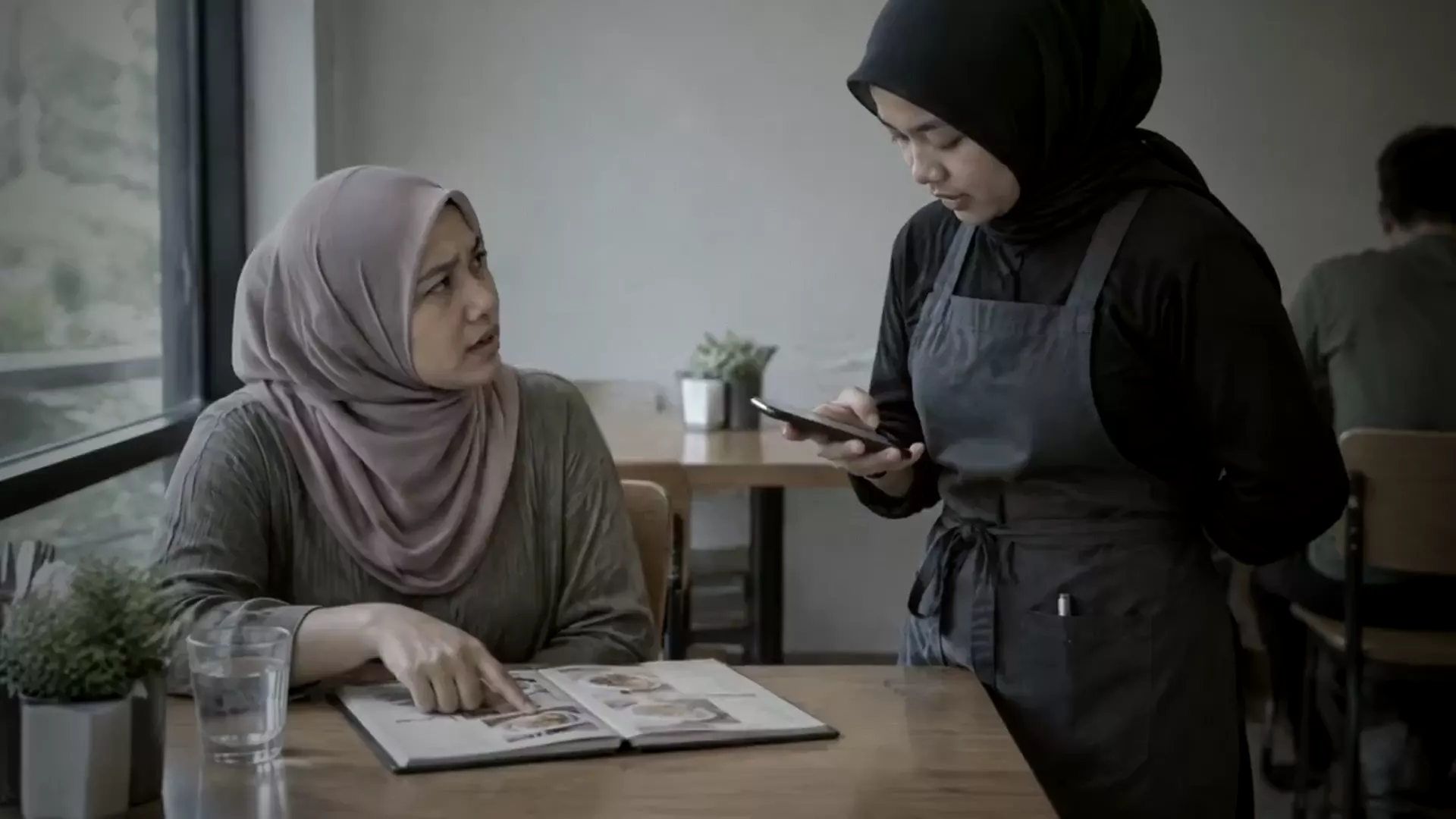
The server checks before she answers. aisop replies only from your approved allergen matrix.
aisop
Answers only from your approved SOPs
“How long can the satay sauce hold on the line?”
Four hours in the bain-marie above 60°C, then discard. Check and log at 11:00, 15:00 and 19:00. If it drops below 60°C, reheat to 75°C once only.
Who it's for
Operators with more than one site to keep consistent.
F&B groups opening their next outlet, hotel groups facing audits, teams racing to an opening date, and brands entering Singapore and Malaysia.
SOPhero Local · India
Inspection-ready on any day, not the day before.
Every market has its own regulation pack: obligations mapped to the operating steps that change, dated, with the regulator named. The calendar tells you what is coming before it arrives.
India pack in progress. Join the early access list to shape what is written.
SOPhero turns rules into operating steps. It is not legal advice.
India compliance calendar
Dates, mapped to operating steps
India pack in progress. Join the early access list to shape what is written.
Founding partner programme
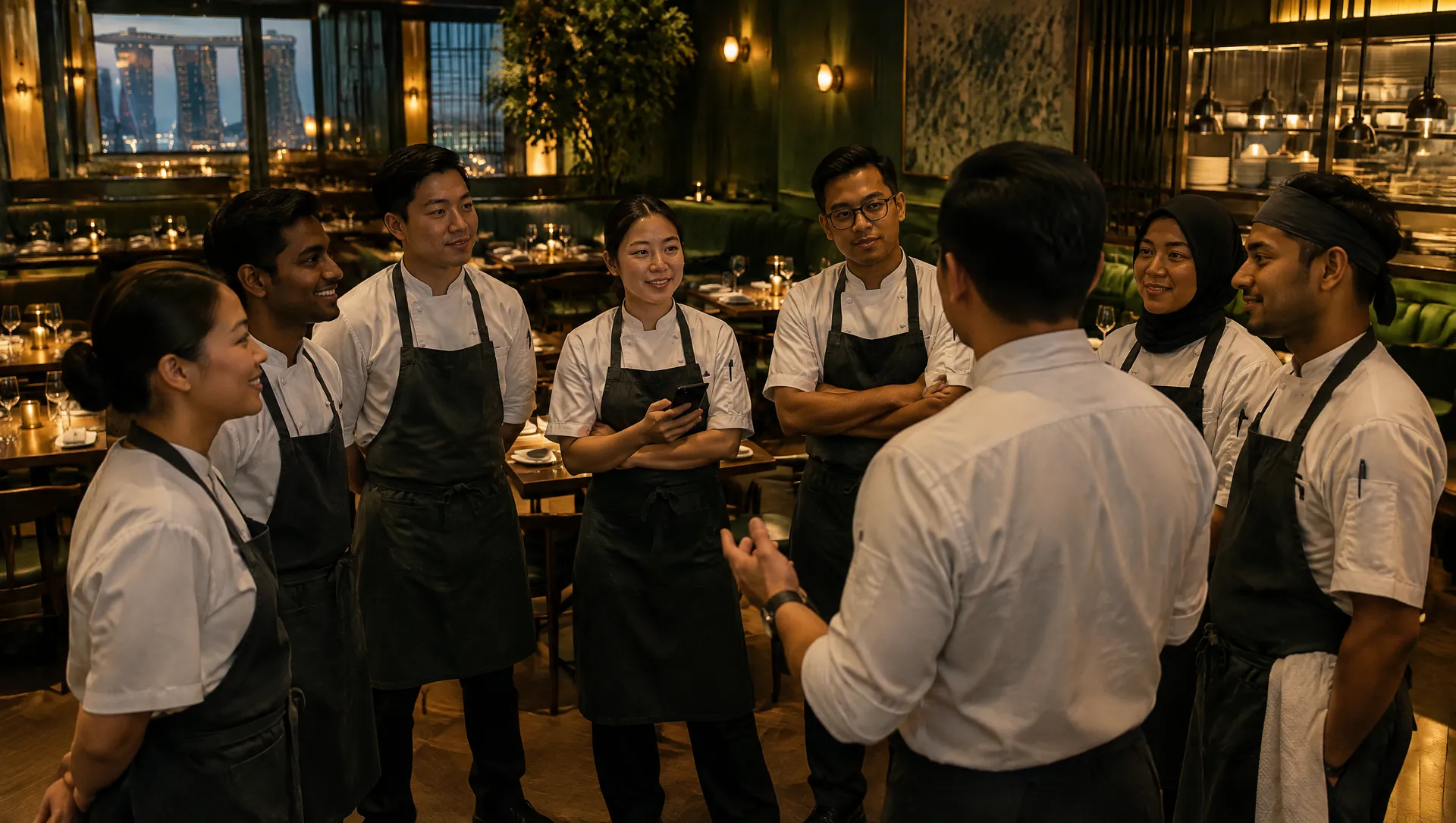
Founding partners shape the standard, not just buy it.
We are taking a small founding cohort in India and opening the next markets with them. We would rather earn the first references than invent them — so this programme is built for operators who want their standards done properly and are willing to say plainly what worked.
Applications are reviewed weekly. Health Checks are scheduled in the order they are agreed.
- Priority onboarding
- Your build starts first in your market, with our delivery lead on your sites from week one.
- A say in the roadmap
- You set what gets written next — which departments, which standards, which market pack lands first.
- Founding terms
- Founding terms on your first Standards Health Check and SOP Build, held for the first cohort in each market.
- Direct line to the builders
- You work with the people building SOPhero, not a support queue — including an honest view of what is proven and what is still being proven.
Services
Start with a diagnosis. Build what matters. Keep it alive.
Each step stands on its own. Engagements are scoped to your outlets, departments and languages.
01
Diagnose
Standards Health Check
Two weeks inside your operation. A scored map of what is documented, understood and enforced, and a build plan.
Learn more02
Build
SOP Build or pre-opening programme
Your best people’s know-how written as validated steps, in your crew’s languages, live at every station.
Learn more03
Run
SOPhero platform, optionally managed
Standards kept current, regulations tracked, and the Standard Score showing whether they hold.
Learn moreTell us your outlets, departments and timeline, and we will send a scoped proposal within one working day.
Request a proposalQuestions
The things operators ask first.
If your question is not here, ask it in the form and we will answer it properly.
SOP software stores documents. SOPhero captures how your best people actually work, turns it into steps that are validated before they ship, and puts them in front of the person doing the job — in their language, read aloud if that is faster. Then it proves the standard was held.
Yes, and most operators start there. We begin with a library of proven hospitality standards, capture how your best people actually do the job, and add the legal standards your market requires. A first department is usually live at its stations within six to ten weeks.
No. Crew scan the QR at their station and the standard opens on their own phone. Managers work in the web dashboard for the Standard Score, review queue and compliance calendar.
30 crew languages, including English, Mandarin, Malay, Tamil, Tagalog, Burmese, Bahasa Indonesia, Thai, Hindi, Bengali, Nepali, Urdu, Arabic, Vietnamese and the main European languages. Standards are read aloud on the phone where it has a voice for the language; in Burmese, Khmer, Sinhala crew read and type, because phones rarely understand those spoken yet. Local words, menu names and allergens follow your glossary, and a fluent person checks every translation before it reaches a station.
You do. Standards are written for your operation, stored on your behalf, exportable, and never resold. Data stays with your organisation, with a processing agreement for groups that need one.
The Standards Health Check runs two weeks. A single-outlet SOP Build takes 6–10 weeks. Pre-opening packs run 3–9 months depending on the opening date. The standards subscription is ongoing: the learning loop keeps them current.
SOPhero turns rules into operating steps. It is not legal advice. We map published obligations to operating steps and name the regulator for each market. Always confirm current obligations with the named regulator for your market.